
 Save
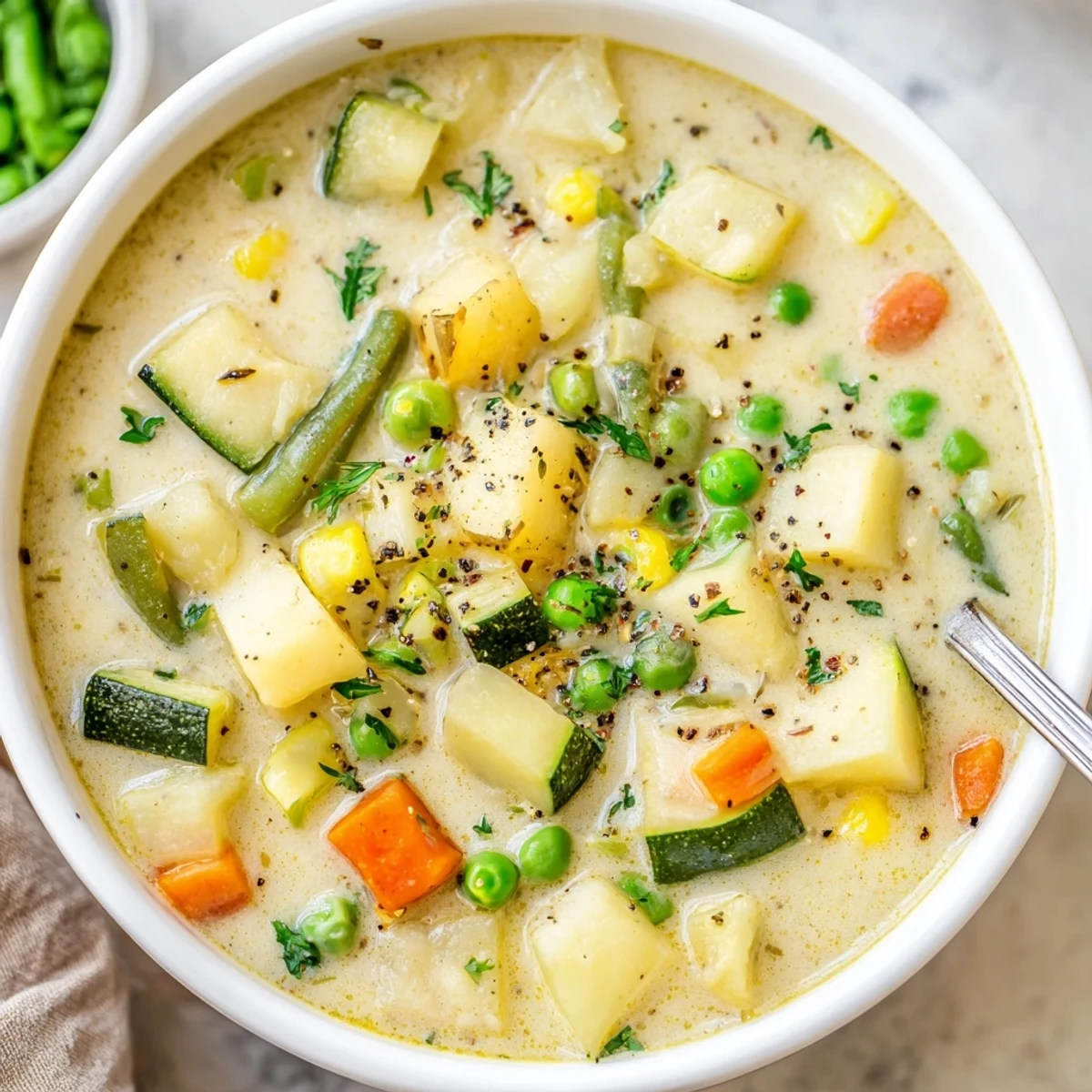
Save This velvety vegetable soup combines onion, garlic, carrots, celery, potato, zucchini, green beans and peas simmered in seasoned vegetable broth until tender. Purée with an immersion blender for a smooth finish or leave some texture. Stir in cream or coconut milk to enrich, adjust salt and pepper, and garnish with fresh parsley. Ready in about 45 minutes and serves four.
Steam clung to the windows as I stirred my first ever batch of creamy vegetable soup, the rhythmic sounds of chopping and bubbling pots somehow settling the rushed mood of a rainy afternoon. Even now, I still smile when I catch the soft aroma of onions gently sizzling, promising something cozy and homely. The mixture of sweet carrots and earthy potatoes is so familiar, yet each time I tweak the recipe, a new favorite emerges. It’s become my calm spot in the kitchen, especially when the weather tries to dictate otherwise.
One cool evening, I made a big batch for my friends right before a movie night—everyone drifted into the kitchen, lured by the smell, dipping bread right from the ladle and chatting over the bubbling pot. That’s when I realized making soup is as much about drawing people in as it is about feeding them.
Ingredients
- Olive oil: Starting with a good olive oil sets the soup’s richness, and I find warming it fully before adding the onions helps all the flavors release.
- Onion: Dice it evenly so every spoonful offers gentle sweetness—if you sauté it to golden, it adds a whisper of depth to your soup base.
- Garlic: Freshly minced makes all the difference; add after the onion so it doesn’t burn and turn bitter.
- Carrots: Give them a little extra time in the pot for the best sweetness—they become pleasantly tender and mellow in the broth.
- Celery: Chopped celery gives backbone; I like to include all the leafy tops for bonus savory notes.
- Potato: Dicing small helps them cook through and makes for a silkier puree, especially with starchy potatoes like Yukon Gold.
- Zucchini: Stirred in near the end, zucchini keeps its shape and adds subtle body—I love how it absorbs the broth’s herby flavors.
- Green beans: Chopped just right, they lend color and a tender bite without turning mushy.
- Peas: From freezer or fresh, peas should go in last for their pop of green and a burst of springlike sweetness.
- Vegetable broth: Go for low sodium if you want control over flavor; a good broth is key to rounding out all the veggies.
- Dried thyme and parsley: These herbs bring gentle floral notes—I once tried double thyme and it veered medicinal, so keep it balanced.
- Bay leaf: Just one shapes the background aroma; remember to fish it out before blending.
- Salt and black pepper: Taste as you go—freshly cracked pepper, especially just before serving, perks everything up.
- Heavy cream or coconut milk: The finishing swirl transforms the texture to silky—I’ve learned coconut gives just the faintest tropical note, especially good when I want it dairy-free.
- Fresh parsley: Sprinkle a little just before serving; it brightens the bowl and makes a humble soup feel a little special.
Instructions
- Begin with the base:
- Heat olive oil in your biggest pot and let the diced onion and minced garlic sizzle just until their scents bloom, stirring so nothing sticks.
- Build the flavor:
- Drop in carrots, celery, and potatoes—listen for that gentle sizzle, and stir until they start to soften and edges go glossy (about 5 minutes).
- Add more garden color:
- Zucchini, green beans, and peas tumble in next; toss everything for a couple minutes so the veggies meet the heat and mingle their flavors.
- Pour and season:
- Pour in the vegetable broth and add thyme, parsley, bay leaf, salt, and pepper; the pot should bubble up in a friendly way as it comes to a boil.
- Simmer gently:
- Lower the heat so things never get wild—let it quietly simmer for 20 to 25 minutes, until every vegetable is soft but not falling apart.
- Blend to your liking:
- Scoop out the bay leaf, then blend the soup directly in the pot with an immersion blender for silky smoothness; or if you’re in the mood for some texture, puree only half before mixing back in.
- Creamy finish:
- Stir in the cream or coconut milk, letting it heat slowly and swirl into the soup like thick clouds—give it a last taste for seasoning.
- Serve and garnish:
- Ladle into warm bowls, scattering with fresh parsley for a little lift and an inviting, vivid finish.
 Save
Save One time I set out extra bowls before guests arrived, certain I had made plenty, only to find the pot nearly empty after seconds and thirds—it was the texture and warmth that did it, making everyone linger at the table long after the soup was done.
How to Reinvent Leftovers
Next day, any leftover soup thickens beautifully—you can stir in extra broth for reheating, or spoon leftovers onto toast for a makeshift stew. Sometimes I slip in cooked rice or a handful of baby spinach to make it a hearty solo lunch. If you double the batch, freezing portions works remarkably well, and none of the flavor fades in the chill.
Swaps Worth Trying
Every fridge clean-out has inspired a variation—sweet potatoes, parsnips, even a handful of corn all have worked their way in. A pinch of smoked paprika changes the mood completely for a deeper, cozier bowl. The creaminess is forgiving—almond milk or oat cream also do the trick without overwhelming the vegetables.
Making It Your Own Every Time
After dozens of pots, I’ve found that what I toss in or leave out often depends on what’s at the market or what needs using up. Some days, it’s more about the bright crunch of beans, others, the soft sweetness of carrots and peas. Regardless, tasting as you go guarantees a soup that feels like it was made just for you.
- Add a splash of lemon juice at the end if you need a little lift.
- Don’t be afraid to leave some veggie chunks if you love texture.
- Remember: the right bread turns this soup into a full meal.
 Save
Save Whether as a rainy day project or a quick weeknight fix, this soup always seems to make the kitchen feel like the heart of the house. Hope it brings you a bit of calm, and maybe some togetherness, too.
Recipe FAQs
- → Can I make this dairy-free?
-
Yes — swap heavy cream for full-fat coconut milk or a neutral plant-based cream. Add it at the end of cooking and warm gently to avoid separation.
- → How do I achieve a perfectly smooth texture?
-
Use an immersion blender directly in the pot or transfer batches to a countertop blender. For ultra-silk, pass the purée through a fine sieve or blend longer while hot.
- → Can leftovers be frozen?
-
Freeze cooled soup in airtight containers for up to 3 months. For best results, omit cream before freezing and stir it in when reheating to preserve texture.
- → How can I adjust the thickness?
-
Simmer longer with the lid off to reduce and thicken, or add more broth to thin. Leaving some vegetable chunks also creates a heartier body without extra thickening agents.
- → What garnishes and pairings work well?
-
Finish with chopped fresh parsley, a drizzle of olive oil or a pinch of nutmeg. Serve with crusty bread, croutons, or a light green salad for contrast.
- → How do I keep vegetables bright and not overcooked?
-
Add tender vegetables and peas toward the end of simmering and remove larger pieces when they reach desired doneness. A quick cool or immediate reheating helps maintain color and texture.